
Everything Ocean Podcast
Shark series part 3: Inside NSW's $120 Million Shark Drone Program: What Surf Life Saving's CEO Told Us
Shark series part 3: Steve Pearce, CEO of Surf Life Saving NSW, takes Dan inside the world's biggest shark drone program — 500,000 flights a year, the protocol when a drone spots a shark, and the truth about shark nets.
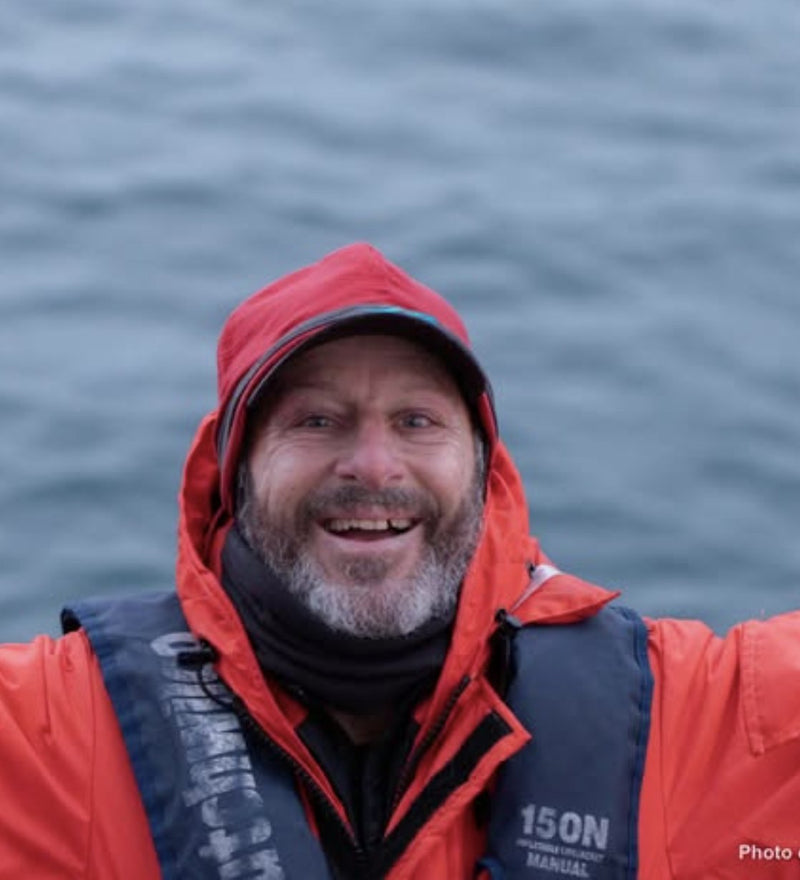
Everything Ocean Podcast — Episode 3, featuring Steve Pearce, CEO of Surf Life Saving New South Wales.
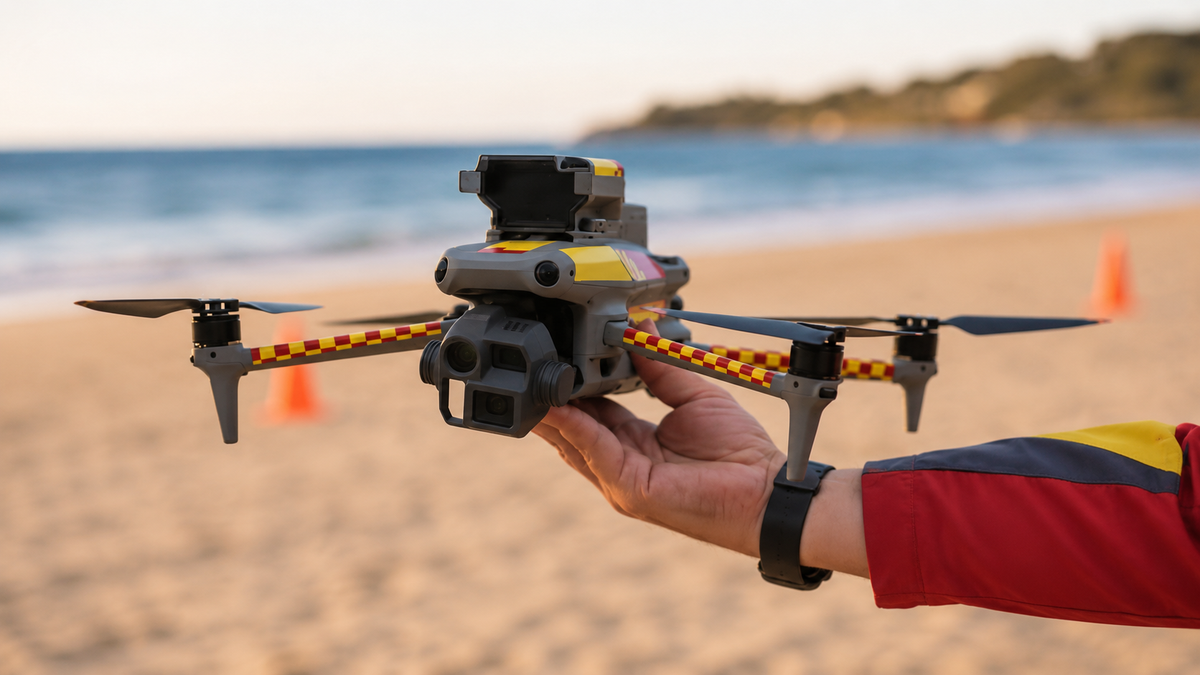
If you've surfed or swum anywhere on the NSW coast in the last year, you've probably noticed them: red and yellow drones sweeping back and forth along the beach, dawn till dusk. For this episode of Everything Ocean, Dan went straight to the source — Steve Pearce, CEO of Surf Life Saving NSW, who brings 37+ years of executive leadership across fire and rescue, state emergency services, and now leads an organisation of more than 76,000 volunteers and members.
Steve let us into their Terry Hills headquarters, showed us the AI drones, walked us through their remote operations centre, and gave us the full picture of how the $120 million, two-year shark drone surveillance program actually works — the largest program of its kind in the world.
Listen or watch: Spotify · YouTube · search "Everything Ocean Podcast" on Apple Podcasts.
Here's what stood out.
The world's biggest drone program just got 5X bigger
NSW has been flying drones to spot sharks since 2017, starting as a trial of just six drones up in Ballina following a spate of shark attacks in 2016–17. Since then, the program has expanded every year. But the scale of what's happening now is on another level.
In the last 12 months alone, the program — already the biggest in the world — flew around 100,000 flights and spotted roughly 2,000 sharks, requiring around 650 countermeasures (beach evacuations or drones dropping to warn swimmers directly). Since the latest funding kicked in on 1 July, that's projected to scale to 500,000 flights over the coming 12 months, with drones now covering more than 50 locations and flying dawn till dusk, seven days a week.
Currently there are 350–400 trained pilots keeping around 200 drones in the air, with a major recruitment drive underway to grow that further.
"It's on steroids," Steve told us.

What actually happens when a drone spots a shark
There's a clear protocol. Pilots are trained to identify shark species — white sharks, tiger sharks, and bull sharks are the three "target" species that trigger a response if they're within close proximity to swimmers or surfers. Other species, like hammerheads, whalers, and wobbegongs, are monitored but usually don't require a beach closure unless they come in close.
When action is needed, the pilot notifies lifeguards directly, drops the drone to a low altitude, and sets off an audible siren built into the drone itself. In more serious situations, the pilot can talk directly to swimmers through a speaker on the drone to guide them out of the water. Lifeguards then sound the beach alarm, and — if needed — deploy jet skis to move the shark on.
Interestingly, Steve says the drones could actually lead to fewer beach closures overall, not more — because pilots can watch a shark that isn't posing a risk and let it move on naturally, rather than closing the beach on every sighting the way older, less precise methods might have.
The part of this program nobody's talking about
One of the more surprising details from the conversation: this technology isn't just about sharks. Surf Life Saving NSW is trialling AI-powered coastal surveillance cameras that can detect when a rock fisherman is swept off the rocks by a wave — automatically triggering an alert to the nearest lifeguards, jet skis, or rescue helicopter.
That system has already saved four lives. It's a significant detail, because rock fishing deaths are the second-highest cause of coastal drowning in NSW, behind only beach and rip-related incidents — a risk category that gets far less public attention than shark attacks, despite claiming more lives.
Busting the shark net myth
We also talked through the full suite of shark mitigation tools in use across NSW — nets, SMART drumlines, VR4G listening stations, the tagging program, and the SharkSmart app — and where drones fit into that picture.
One point worth repeating: most people assume shark nets stretch the full width of a beach. They don't. As Steve put it, "it's sort of like a tennis net sitting in the middle of the Hume Highway" — sharks (and everything else) can simply go around them. Around 90% of what's caught in the nets is bycatch, not target species.

What this means heading into summer
With a hot, El Niño-driven summer forecast, Steve expects strong visitation to beaches — and he's hoping the drone coverage helps rebuild public confidence after a run of shark incidents that rattled coastal communities over the past year. Interestingly, after the fatal attack at Long Reef last year, Surf Life Saving NSW actually recorded its largest nipper registration numbers in years — membership is up 4% year-on-year, with close to 87,000 members now involved.
Steve's message for anyone heading to the beach this summer: none of these tools — drones, nets, drumlines, or shark bands — are 100% foolproof, and none of them replace basic shark awareness. But taken together, and especially with drone coverage now this extensive, the odds of spotting a shark before it becomes a problem have never been better.
Catch the rest of the shark series and every episode under the Podcast filter in From the Lineup.
Full episode transcript
Read the full transcript (auto-generated — tap to expand)
This transcript was generated automatically from the episode audio, so expect the odd mis-heard word.
[00:00] Episode three on the Everything Ocean podcast and this is a little bit of a shark chat one but also delves into the surf lifesaving world. We're talking with Steve Pearce who's the CEO of Surf Life Saving New South Wales. Steve brings more than 37 years of executive leadership, crisis management and emergency service experience across Fire Rescue New South Wales, state emergency, and now is the CEO of Surf Life Saving New South Wales. He is responsible for an organization of more than 76,000 volunteers and members across New South Wales. And he was kind enough to take us into their headquarters, show us around, tell us about their new drone program that's happening in collaboration with the government. It's $120 million. And for myself as a surf coach and surf school operator,
[00:50] it's definitely been making me feel a lot more comfortable in the water. Steve let us in. He showed us some of the AI drones. He showed us the master room and we really explored how the logistics of this whole operation are going to work. So it's definitely going to be on the forefront of shark mitigation going forward in my opinion and we're really honoured to have the chat with him.
[01:47] Steve here today is the CEO of Surf Life Saving New South Wales. — I'm glad you got that right, bit of a tongue twister. But yeah, we're just here to have a chat about a lot of things, but a lot about the new shark drone surveillance program that the government's implemented with you guys. $120 million across two years, which as a surf school operator has been making me feel a lot safer and it's highly appreciated. Before we get into all those things, just want to know a bit about your background, Steve. What made you take the jump into surf life saving? — Yeah, so I can correct you on that stat. I spent about 25 years in fire and emergency services in fire
[02:34] rescue, which was fantastic — great job being a firey. And I left there as a chief superintendent because I got offered another position down with the NSW State Emergency Service as a deputy commissioner down in Wollongong. So I went there for 5 years, then I went out and did a bit of consulting, and then this position here was advertised. I always had that in the back of my mind — if there was an organization I'd love to be a CEO of, for what it stands for and the people that are in it, this was it. So when it came up I applied and I was really fortunate to get the gig. I've been here for about nine years, and it really fits well with what I like to do socially and also the reason for being. — Yeah, totally. It's amazing facilities
[03:22] out here. We're in the bush, which is epic. — Yeah, so it's full open plan, and it's also designed a little to be like a surf club feel. So it's got a really nice vibe and a good culture when you come in here. Really ironic, as I was telling you, we sit on a peninsula here on the northern beaches — the most bushfire prone area in the northern beaches. So it'll be quite ironic if we ever get burnt down one day, which I hope never happens. But it's a really nice place to work, and most of our staff are really young. We've got a great team here — they punch well above their weight. — Nice. And you've been a lifesaver yourself down in the Illawarra area.
[04:11] — Yeah mate, down at Stanwell Park. I had both my two boys — I say my little boys, but they're both 32 now — they were nippers down there as well. When you join, you put your kids in as nippers, and as a nipper parent that's the way you get hooked into surf life saving. So I became a patrolling lifesaver down there. That feet-in-the-sand experience gives you a real good appreciation for when you're trying to roll out policies and strategies. And really interestingly, we've got around 140 permanent staff here, but I'd say almost
[04:58] 50% are volunteer lifesavers as well. So it gives you that reality about — is this really going to work for the volunteers, and is this really going to work for the community. It's a nice balance. — Totally. And we were actually just talking about this only five minutes ago, but how has the run of recent shark incidents affected you and your local community, whether that's surf life saving or surfing or beach swimming? — Oh, totally. Those shark attacks since September last year — the first one with Mercury down here at Long Reef, and then the most recent one with Leah down there at Coogee Beach — that really sent ripples right throughout every part of the community, and surf life
[05:46] saving, we aren't immune to that. My local beach is Stanwell Park. We sit right on the border of a national park, but we sit in really deep water off our beach, so we get some big visitors along there. Pleasingly we have a shark drone that surveils the beach, and often we'll see reports of white sharks or something down there — that gives us a lot of confidence. But for me, even though I'm an old bloke now, I still like to try and get in the water, but my whole aspect of surfing has changed. Whereas before I'd look for the most isolated spot with no one around just to enjoy it, now I look for the most crowded spot to go out in, because I just want people around with me. Sounds a bit weird — we're trying to build community confidence, and that's part of this program — but that's
[06:34] just my personal experience down there, and we don't see that many surfers in the water down there at the moment because of this. And from a surf life saving thing, the big question for everyone is how do we look after our nippers. We've got say 30,000 nippers — they're like soldier crabs, you see them out on the weekends. The parents obviously want the confidence and assurance that they're going to be looked after in the water. So we have our own drones that look after our own clubs, and the drones are also being rolled out, as you've seen, with Surfing New South Wales, so the board riders get theirs as well, which is a really great initiative. But I think everyone's got a heightened sense of awareness at the moment. And this summer is supposed to be a really hot summer, so
[07:20] it's going to be interesting to see how that plays out with confidence. — A lot of people coming down to the ocean for sure. It's funny how different areas seem to have their little time of being affected, and this feels like it's Sydney's time. We had a break after the Mercury one in September, then we had all the bull shark incidents late summer, then there was a little break again, and then keeping it in the news was those three spearfishermen incidents one, two, three weeks in a row, and then it was Leah. So it was a month of shark incidents. Just that keeping it in the media — it's been front of mind for everyone, and I've definitely felt it in the surfing communities I'm involved with:
[08:06] numbers have been way down, which is why it's great that we've got the drones coming in to instill a bit of confidence. So if you could just tell us a little bit about the drone program — how it works day to day, who's flying them. You saw the Premier come out and say we're rolling it out on Wednesday — how many days was it, four or five days later? — Not many. I used to have jet black hair, mate, before then. And sure enough, it happened, and they're on every beach now. — So what happens when a shark's spotted? — Well look, it's been a really interesting journey, Dan, because we've actually been using drones to spot sharks since 2017. That's when we started the trial for the Department of Primary Industries and
[08:53] Regional Development. We did that up in Ballina, on the back of that big spate of fatal shark attacks up there in 2016–17. We started flying just a trial of six drones up there, and from 2017 to right now, every year that program has been expanded and expanded. And the effectiveness of the drones in the shark management strategy — you have the nets, you've got the VR4G listening stations, you've got the SMART drumlines, you've got the SharkSmart app, and you've got the drones — well, the drones would be by far at the top, the apex of effectiveness,
[09:41] even when you look at the research about the bycatch on the nets as well. Currently we have around 350–400 pilots now, and we're doing a massive recruitment campaign — 350–400 pilots is a lot, but we still need a lot more because of the extent of what we have to fly now. We fly around 200 drones. We are the largest operator of drone surveillance in Australia. This drone program for the shark management strategy is the largest in the world — which is full credit and kudos to the New South Wales government, mate. And with the announcement — the announcement really turned it on its head. To give you a comparison of how big this program is
[10:28] now: in the last 12 months it was the biggest program in the world, and we flew around 100,000 flights in 12 months, which is enormous. We spotted around 2,000 sharks and we had to do about 650 countermeasures — I'll explain what that means in a minute. The modelling for this program — because we're now at over 50 locations, and they go even bigger again in the summer, we fly dawn till dusk 7 days a week — that's going to equate to around 500,000 flights in 12 months. 500,000 separate flights. Roughly, when you look at it, the drones will be in the air around 260,000 hours.
[11:15] And when you think about sharks spotted — if we spotted 2,000 sharks in 100,000 flights, you can probably imagine we're going to see a lot more. That kicked off on 1 July, and since then we've done a significant amount of flights. People see the red and yellow drones flying, they see the pilots on the beaches, all in red and yellow pilot UAV uniforms so people know they're there. It's a really big complex operation. — It would be. You're 5x-ing what was already the biggest drone operation in the world. — It's on steroids. — Yeah, totally. And the parameters around a shark spotting —
[12:05] is there a protocol at the moment? Are they shutting the beach every time they spot a shark, or are they trying to distinguish the breed, the size of the shark, before these closures come into play? — You've done some good research, mate, because you're bang on. We are only interested in three target sharks for beach closures normally: a white shark, a tiger shark, and a bull shark. Obviously we sight so many other sharks — whaler sharks and grey nurses, wobbegongs. The pilots are trained to identify the species of shark. So if it's a hammerhead or a whaler, as long as it's not within close proximity, they won't shut the beach. And when I
[12:53] say they shut the beach — our pilots are in contact with all the lifeguards on the beaches and all the lifesavers. They'll make a call to say it's a good enough distance away from people, but if they see it coming in close to swim groups, then they'll enact the countermeasures, which will be the sirens, and they'll shut the beaches. But interestingly, over the years we've actually seen fewer beaches shut because of the drones than before they came into play. That's because you can spot a shark and actually watch it and monitor it, and if it doesn't come near anyone, there's no requirement to shut the beach. The pilot will just monitor that shark until it leaves that area of the beach, around the headland to the next beach.
[13:41] We have seen quite a few beach closures this year, but the beauty is we can notify the lifeguards, you can shut the beach down, but then reopen it really quickly when the shark moves off. At the end of the day the lifeguards make that call about opening and shutting — our pilots just provide them the advice: for example, it's a white shark, 3 metre white shark, close to the swimmers. — And I guess you're taking out a lot of that misidentification that used to be around. I know my mum's probably done it before — being that paranoid mother on the beach, she's seen a dolphin and goes, yep, that's a shark, runs up, tells the lifesavers, Chinese whispers, and that information gets back to them and they
[14:28] just do it, because they don't want to be the lifeguard where something happened at their beach. — The way it works is that if Dan the pilot is flying at Bondi and he spots a shark in close proximity to surfers or swimmers, he'll notify the lifeguards, and the lifeguards will shut the beach. At the same time, the pilot will drop the drone down to pretty low altitude and set off the siren on the drone. All our drones have really high-pitched audible sirens, and they have speakers. The sirens are to evacuate the water, but if there's an extreme circumstance, the
[15:15] pilot will actually talk — Dan the pilot will talk to the surfers and say look, there is really impending danger, and the pilot will try and guide you away from there as well. So if you hear the siren on the drone, and the pilot starts talking through the speaker, you'll know something's really amiss — and the lifeguards will set the beach alarm off as well. And then we'll activate — either lifeguards put their jet skis on the water or we'll put our jet skis on to try and chase the sharks out as well. — Yeah, it's awesome. I've been on the end of it — I've been evacuated from an alarm. I'm pretty good mates with the guy at Dee Why that's there most of the time, and one time I was just out there and he
[16:02] just saw a big manta ray and goes, "just so you know, there's a big manta ray over there, you want to go check it out?" Pretty funny — but my students were like, what's he saying, is it a shark? — And that's the beauty of it. The pilots go through specialist training to be a drone pilot for shark spotting. All the pilots I talk to, mate, they love the job, because you're looking at everything marine. While they're looking for sharks, they'll see manta rays, they come across whales, they see pods of dolphins. It's a pretty cool job if you love the ocean. — Totally. And what about those kind
[16:49] of grey-area sharks, like your hammerheads or your bronze whalers or the dusky whalers — ones that aren't necessarily known to be aggressive? — Even though they're not a target shark, if they get within close proximity of swimmers or surfers, they'll set the alarm off still. We see footage all the time from the drones — even the other day, and this is during winter when the water clarity is unbelievably clear, there was a really big whaler shark that was trailing a big swim group. It was a
[17:38] decent size whaler shark, but the pilot didn't enact any of the sirens until it came within a bit closer proximity, on the side of caution, and let everyone know. Sometimes you look at the sharks and some of them look so graceful in the water. But the program we have is a great program. — It is. And tell us a little bit about it — was this in the pipeline anyway, or was this kind of a direct response to the Coogee incident with Leah? — So we had really extended the flights of drones after the spate of attacks last December. The
[18:26] program we had was amplified again during that period because of the interactions with the sharks, and because we had that really big spell of heavy rain that really activated the bull sharks. The bull sharks came out of the rivers, they were hanging around all the river and creek outlets on the beaches, and it was just far too dangerous. So the government asked us to really amplify what we were doing then. But after Leah was so tragically attacked around 11 in the morning — come late that afternoon we were already in firm discussions with government, government wanting to know what we could do to really ramp up. And there's a whole raft of issues we had to overcome, like CASA regulations for
[19:14] flight paths, flight approvals to get our drones in. We've got a special exemption licence that allows us to fly our drones in military airspaces, around airports. The only area we really didn't have a clear flight path was Coogee — but we obviously do now. — Yeah, it was super tragic, and it's just good now that you guys do have that exemption. — Look, I think it may have been avoidable, but even if we had exemptions for that — and we had to explain this a fair bit because there was so much intense media interest — that wouldn't have been a scheduled beach to fly at over the winter period,
[20:01] just because of the profile of the beach and the shark movement data that DPI have. So even if we had the exemption, I doubt we would have had a drone flying there on that day. Whereas now — everywhere. — Yeah, totally. And the AI drones that are coming out — are they already being trialled? — Not at the moment, but at the moment every one of our drones is AI capable, so we can plug a program in straight away. But there's programs and there's programs, and everyone will say they've got a program that really works — none of them have been signed off by any research. So the government is
[20:51] requesting us to trial three separate AI programs in drones so we can make a determination on what's going to be the best. During this AI trial we'll run AI shark detection through it, but we'll still have pilots there watching the screen as well. The reason we need the AI is our next leap of technology: at the moment we have one pilot flying one drone. What we want is to enable one pilot to fly multiple drones — one pilot flying probably five or six drones. To do that you need an AI program that can detect a shark, so the pilot can take control of that particular drone and look at what it's detecting.
[21:39] We already fly drones autonomously around the state. People see our pilots on the beach flying drones physically, but here at our head office we've got a centre called the remote operations centre — pilots sitting in a dark room flying drones hundreds of kilometres away up the far north coast. We utilise that technology already, but we don't enable any AI. We're hoping in the next three to four months we'll commence that trial for government, and the trial will run for probably 12 months to see which one of these programs works. — So you're field testing a few — is that at Crowdy Head? — We've got to make a determination where we're going to test
[22:26] all these. But where we're flying some of our autonomous drones is Crowdy Head as one location, Bungan, Avalon. We've got these real high-tech mobile trailer units that we tuck away in the bush so no one sees them, and the pilots will just control them — they'll take off, do their sweeps exactly like if they were sitting on the beach. Really great technology, and that's part of this uplift of funding — to really rapidly deploy technology moving forward. — Yeah. And all this data you're collecting — because it's not just a shark mitigation method, it's also a data collection procedure, isn't it? You're going to have so much more data on how many sharks are out there, how big
[23:14] they are, where they're moving. What's happening with all this data? — Because we're looking more — we've got so many drones, we're going to see more. In preparation for you coming today I wanted to check some stats. This uplifted program started 1 July. Since 1 July we've seen around 450 sharks, which is a fair few sharks, and we've had to do these countermeasures around 150 times —
[24:03] either evacuate the beach, drop the drone down, tell the surfers there's impending danger. So there's a lot of sharks out there. The data we're capturing — when you think about it, 500,000 flights, 260,000 hours of footage — all that data is put into a big processor, and it's handed over to the Department of Primary Industries and Regional Development. All their scientists will then use that data to determine shark movement data, species, and size of sharks, and that will then inform probably next year's flight programs, where they want to move everything
[24:51] around. But we also collect other things — there's whale data in there, we spot the whales, and leatherback turtles. A whole raft of things. — Yeah, totally. I didn't think about the other elements of the ocean out there that are all going to need collecting. It's like finding needles in a haystack — up until now it's just such a big area to collect that data in any other way. — We've just started publishing on some of the social platforms some examples of the flight mapping data, so people can actually see what coverage one drone does. One drone will do around
[25:40] 25 flights a day, so you're going to pick up everything in there. It is really interesting, everything else that's picked up on the footage as well. — I saw that you put on LinkedIn — was it Tamarama and Bronte, you've got one drone that goes across the two? — Yep. And Bondi. Bondi is probably a great example, because there's been so much media interest — other people that have drones posting "I've seen a white shark here." So we thought, just to ease everyone's anxiety and say look, there's coverage here, we did some computer modelling of the flight data and put it there. When you look at it, you can barely see a spherical bit of water — the flight path is really good. And that's the
[26:26] beauty of using these drones: normally there's one drone dedicated to one or two beaches, and they're continually sweeping. If it does spot a shark, it goes up in elevation and looks at all the other aquatic users and thinks: right, I've got to go over to that group of surfers, set the alarm off, and there's a swim club over here, so I'll go over here. It's really proactive management of how they respond when they see a shark. — And is it just sweeping, or do they have different patterns? — Depends on the location. In some locations the pilots can set up what they call a geofence, and the drone will just be programmed to do sweeps from one end to the other, like colouring in a piece of paper. Other
[27:15] pilots, if there's a lot more water use, will hold the drone controls themselves, because swim clubs will go out and want to swim around a headland, so the drone will follow them; a bunch of surfers will be up on the point, so they'll get down to cover them. It continually moves around all the time. — Do you foresee, say fast forward 10 years, AI drones, multiple at the same beach, just sweeping? — Look, you just don't know what's going to be around the corner in 12 months — technology is moving that quickly. If you'd told me we'd be flying drones hundreds of kilometres away from the head office, I'd say you're dreaming. And if you said we're going to use
[28:03] AI to detect sharks, I'd say I don't know if it really works. But we actually already use AI in a trial program at the moment on our coastal surveillance cameras. We're running a program of AI watching rock fishers on rock shelves. The AI can detect if a rock fisherman gets swept off by a wave into the water, and as soon as they get swept off, it sets our alarms and we can automatically respond — the nearest lifeguards, our lifesavers on the skis, or get our helicopters out there. We're running it at two separate locations, and already we've saved four rock fishers' lives. It's amazing when you see this footage — no one else would have known they had gone in, and
[28:51] some of them would have drowned. — They're an underappreciated risk category, aren't they? There would be more rock fishermen passing away each year than surfers being attacked by sharks. — Yeah, by tenfold. In fact rock fisher deaths are the second highest causation of coastal drownings in New South Wales. The highest is beach and rip related, but second highest is rock fishers getting swept off rock platforms. — Yeah, that's interesting. So I guess there is a bit of a balancing act — we have a lot more information and data, but we're also trying to keep the public calm, which is hard when the media is doing anything but. What do you think the balance is between shutting down the beach and keeping
[29:39] everyone safe, and also trying to keep our beach culture strong for local businesses and tourism? — I'd start with the latter part of that question. For me, apart from this being a great safety blanket and initiative, it's all about community confidence and community resilience. That also means local small businesses — the beaches were decimated for visitation after these shark attack incidents, and I know the government's super keen on trying to attract people back to the beaches. With the drones, it is a fine line: we want to tell everyone the drones are there so they have confidence that we're surveilling
[30:26] the beach all the time, but people also have to be aware that it's not failure proof. Just because a drone's there doesn't mean someone won't get hit by a shark — best endeavours. Because of the amount of data we're getting — the amount of sharks we're seeing and beach closures — the fine line is how much do you promote it. People want visibility; you don't want to generate anxiety, you want to generate confidence. My personal opinion is we should put out as much information and communicate as much as possible, just to fill these black holes where people
[31:14] start to fill in that missing information. What we've actually done in preparation for this summer is we've got a recruitment out at the moment for a new position here in the media comms team, and that person's job solely will be communicating about the shark management strategy — the SharkSmart app, talking about what we're seeing, putting some cool posts up, just trying to alleviate that anxiety. — Yeah, totally, that's a good idea. There's going to be no shortage of it coming into summer. Nets, drumlines, drones, tagging — where do you personally think our money is best spent? — Look, I'd be parochial if I said it should stay in drones, because
[32:01] obviously we're running the drones. But I'm pretty impressed with the SMART drumlines and the VR4G listening stations — the way the sharks are tagged and released. I'm probably a little bit of a greeny — I don't like seeing any creature harmed, but I understand the risks of sharks. — Compared to Queensland — they have lethal drumlines, don't they? — I think it's catch and kill there. But here, a shark is caught on the SMART drumline, it's tagged, it's towed about a kilometre out to sea, then released. I like looking at the SharkSmart app to see the tagged sharks, but sometimes it
[32:50] probably freaks me out a little bit, because the notifications are too big. You've got to remember that with the listening stations, the detection will go off if a shark is within 500 metres. So people need to understand that just because they see a listening station off Bondi go off, it doesn't mean a shark is between that listening station and the beach — it could be another 500 metres out to sea. — It could just be migrating up the coast. — So I still think you need a suite of all those options. The shark nets — there were thoughts to remove them, and then after Mercury's death the decision was made
[33:39] to leave them in situ. I look at the data in regards to the bycatch of those. — What is the data saying? — It's saying that 90% of what's caught in nets is bycatch — not target sharks at all. But in saying that, it does provide a lot of confidence for people. — I was actually speaking to an international visitor yesterday and they were under the impression that the nets are just always there — they're like, "but how did it get through the net?" And you're like, nets aren't in at the moment. — Not only that — when people think "I'm going to a beach that's got shark nets," people think the nets go across the entire beach, top to bottom. Whereas they're only
[34:26] 250 metres long, and they sit like 4 metres off the surface and 4 metres off the bottom. It's sort of like a tennis net sitting in the middle of the Hume Highway — things can go up and around it. But they're there, they've been there since the early 1900s, and they're part of the suite of management strategies at the moment. — Because we used to have a run of shark fatalities like this in the early 1900s, didn't we? — Early 1900s — and we hadn't seen a spate of attacks like this since, until Mercury. The English swimmer at Little Bay was five or six years before that, but he was the first one in about 60 or 70 years.
[35:12] — And that was because they went into these shark management procedures such as culling and nets — do you think that's why? — Look, I don't know what the driver was. I think you've just got to look at the whole suite of strategies — I don't think there's one specific thing that's going to prevent a shark attack. The drone surveillance, I think, gives you the greatest probability of identifying a shark before an interaction. It's not foolproof, but it gives a greater amount of time to
[35:59] evacuate the water. — Yeah, totally. The recent clusters that have happened — how do you think that's changing how the everyday Australian relates to and uses the ocean, and do you think this is going to have an impact on, say, nipper numbers for the year? — It's interesting. After Mercury's attack down there at Dee Why–Long Reef, we thought the surf clubs down there would be decimated for the next patrolling season. In fact, they had the largest nipper registrations in many years. But I think there are still a lot of people that are nervous, because there's been so much publicity about the sharks and the shark attacks. Statistically you've got
[36:46] more chance of getting run over walking across the road than being bitten by a shark. But this summer is forecast to be hot — it's that El Niño cycle coming back in. Normally that would drive big visitation, and I'm hoping we do get a big visitation, and I hope the drones contribute to that public confidence to come down. But people need to be shark aware, mate — that's the thing. — That's it. None of these things are going to make it 100%; people need to know that risk. I definitely see a few people that I surf coach that put on a shark band and they're like, "I've got my shark band, I'm going to be all good." No offence to shark bands if anyone's listening — it's another deterrent
[37:33] method, but I've seen some of the science and the data on how they work on bigger sharks, and that alone is not going to save you. — No. And you're right — we obviously watch that with interest as well, because basically our place of work is the water, and we've got our lifeguards and our lifesavers in the water all the time. But we take all our research advice from the Department of Primary Industries and Regional Development — they've got the scientists. The day they come to me and say this shark repellent device is 100%, we'll roll that out to a lot of our people. But in the meantime, I'd say to people: don't be reliant on just one thing. — Yeah, totally, good advice. If you had to protect one thing about the way Australians use the ocean for the next generation, what would it
[38:22] be? — Protect one thing? I would think just protect people's confidence. Being in surf life saving — everyone that works in surf life saving loves the beach and loves the coast, and it attracts a certain type of person. If we can help keep people safe with our drone program, it's fantastic. And if we can build better social cohesion and engagement and inclusion with our surf clubs and the way they operate, that's a good thing. — Totally. And bringing that back to the coming season of surf life saving and nippers — what would you say to parents and nippers? How do you see the coming season going with participation
[39:09] numbers? — Good question, Dan, but I'd have to say that Surf Life Saving — we are the only volunteer emergency service or life-saving organization that's growing year on year. In the last 12 months we've grown 4% just in our membership, so we've got close to 87,000 members with us now, and our nipper numbers are increasing exponentially. I'd just be saying to our lifesavers and to all our nipper parents that the additional blanket of drone coverage can only assist in keeping all our people safe, let alone the rest of the community safe as well. And it's going to be hopefully a big, good, hot summer.
[39:57] I'm really looking forward to this summer. — I'm hanging out for it as well. — I think everyone is. We haven't had a good hot Australian summer for a long time — and dry as well, it's been so wet all the time. — That definitely plays into the fear now, with bull sharks coming down earlier and then you get the rain. After the last spate of attacks when it was raining, I think rain and summer are going to be looked upon very differently to how they used to be. — And people might have seen this at the end of last summer — we'll definitely be doing it this summer: if we get really big rain events and we know there's going to be a big outwash from rivers and creeks, we will be putting out public warnings about the
[40:44] turbidity of water and the risk of increased shark activity. We've never done this before, but based on last year, that's what we'll be doing — just another added warning to people. — Yeah. On one of the last podcast episodes I had a shark expert, Daryl McPhee, and he was saying it's about 45mm of rain and above when the bull sharks start to get triggered. That was interesting to know, because I get a lot of parents now asking me — it sprinkles down in summer and they go, "well, it's raining now, you can't take the kids surfing" — and the water's still clear. I get the hesitation, but it takes a bit more rain than that. When we had that spate of attacks, there were hundreds of mils
[41:32] of rain multiple days in a row — it was completely chocolate brown. That's more the danger area to watch out for. — I just think about how the water looked after the big spell of rain here in the northern beaches — Queenscliff, North Steyne, Manly — it was really turbid, dirty water, and that obviously generated a lot more bull shark activity. And we saw that really terrible attack at North Steyne. — If nipper numbers or volunteer numbers were declining, what would that mean for the future of New South Wales safety on the beaches? — The nippers are basically our nursery of future lifesavers and lifeguards. If they started
[42:19] to decline, we'd be really worried about what our future growth is going to be. If we didn't get the registrations of people coming back to be lifesavers, that's a massive impact for community safety. Fortunately, it's the other way around, and I don't have to worry about that at the moment. But we work really hard to generate a really good, healthy, inclusive culture, and that's the reason I think we attract so many people to the organization. And who wouldn't want to be a lifesaver in the summer, being down between the red and yellow flags? It's a bit of a rite of passage growing up in Australia. — Couple of quick questions, because I know you're a bit of a surfer — have you been surfing much recently, what board are you riding, and what's your favourite wave down south, if you can
[43:05] name it? — Okay — let me tell you the best wave I used to love surfing at, but I can't anymore because I'm such an old bloke: being 62, I'm not quick anymore, but I used to love surfing at Guillotines down the south coast. They call it Guillotines for a reason — last time I was there I got carved up. I ride a mal now — probably all the surfers are saying "old kooky bloke," but I just ride a mal now. But I love surfing anywhere, to tell the truth, if I can get out there. Unfortunately I'm pretty busy with work, but this summer with daylight saving — I'm hoping it's going to be that Australian summer again that I remember as a young bloke. — Yeah, awesome. Cool, Steve — thanks for your time, appreciate it. — Thanks, Dan,
[43:51] great to talk to you too, mate. — Thanks for listening or watching to the Everything Ocean podcast. If you enjoyed today's conversation, please follow the show and share this episode with someone else who might enjoy it. If you want to follow us on our social media, we're on Instagram. We also make awesome accessories over at Boardsox. And if you're interested in surf coaching services, you can catch me at Dee Why Salty Surf School or Salty Safaris Surf Tours. And please — if you have any good guest recommendations, I'd love to hear them. Drop them in the comments below.