
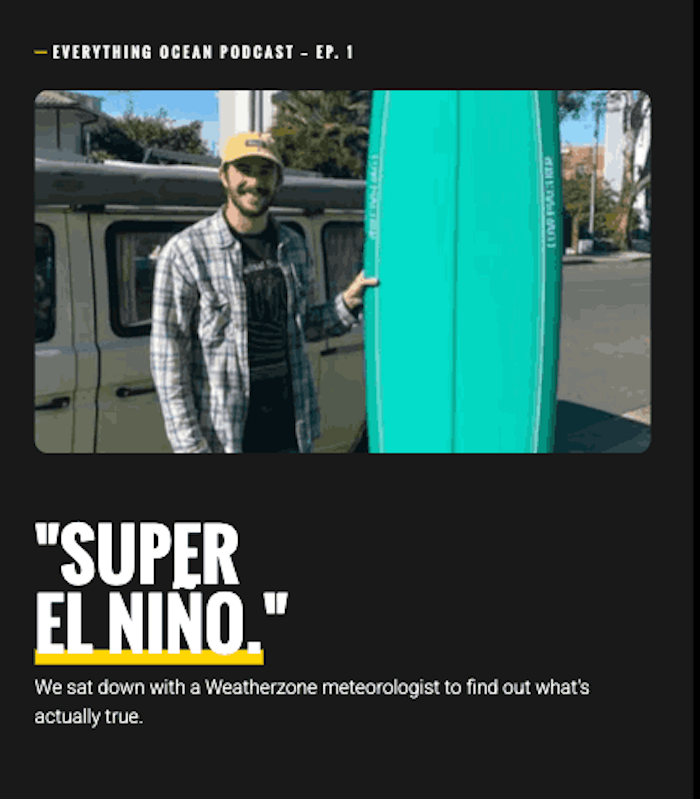
Everything Ocean Podcast
Shark Series Part 1: Super El Niño 2026: what it means for Australian surf, water temps and sharks
Weatherzone meteorologist Felix Levesque on the coming "super El Niño": what it means for Australian surf, why Sydney's water is sitting at 18.5°C, the truth behind the viral "500 years of stored ocean energy" claim, and why bull sharks and Irukandji are turning up further south.
The Oceans Matter Podcast is back, and it has a new name: the Everything Ocean Podcast. Same mission, bigger format. We're filming every episode on video now, so you can watch the full conversation as well as listen on Spotify and Apple Podcasts.
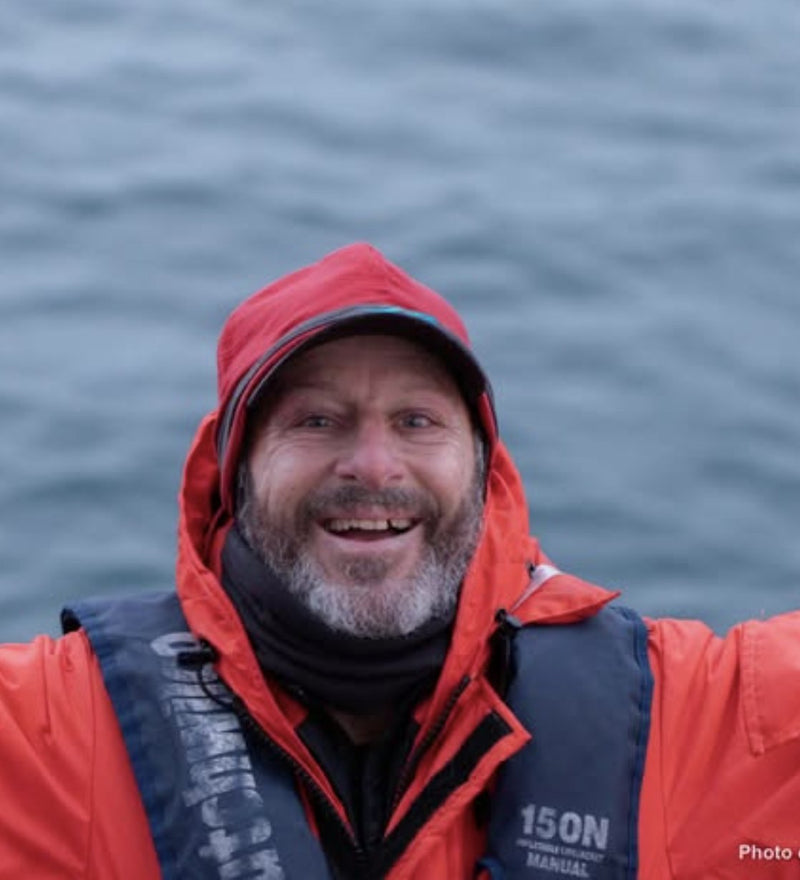
For Episode 1 I sat down with Felix Levesque, a meteorologist at Weatherzone, to work out what the coming El Niño actually means for Australian surfers. Not the headline version. The real one.
Listen or watch: Spotify · YouTube · search "Everything Ocean Podcast" on Apple Podcasts.

Is this a “super El Niño”?
“This El Niño is forecast to be very strong – maybe a super El Niño.”
— Felix Levesque, Weatherzone
That puts it in the same territory as the 2015/16 event and the El Niño that preceded Black Summer. It's a serious comparison, and it's exactly why we wanted someone who reads the models rather than the headlines.
Fact check: the “500 years of stored ocean energy” claim
You've probably seen the viral version — that this El Niño will release 500 years of stored ocean energy. Felix's answer: the real number is closer to 300–400 years, and the framing is misleading either way.
But he's equally clear that 2026 could still be one of the hottest years on record. Both things are true at once, which is the nuance that gets flattened online.
Sydney water temperature: 18.5°C and climbing
This is the number that stopped me. Sydney's water is sitting at 18.5°C — about 2°C above the July average. It's been years since we've had a proper 16°C winter.
Two degrees sounds small. In the ocean it isn't. Here's why:
“A cubic metre of water stores 10x the energy of a cubic metre of air.”
— Felix Levesque
That's the whole mechanism in one line. The ocean is the battery. Warm it up and you get bigger storms, more rain, more heat — and, this season, elevated bushfire risk.
The El Niño surf forecast: what it means for waves

Here's the part most surfers actually want:
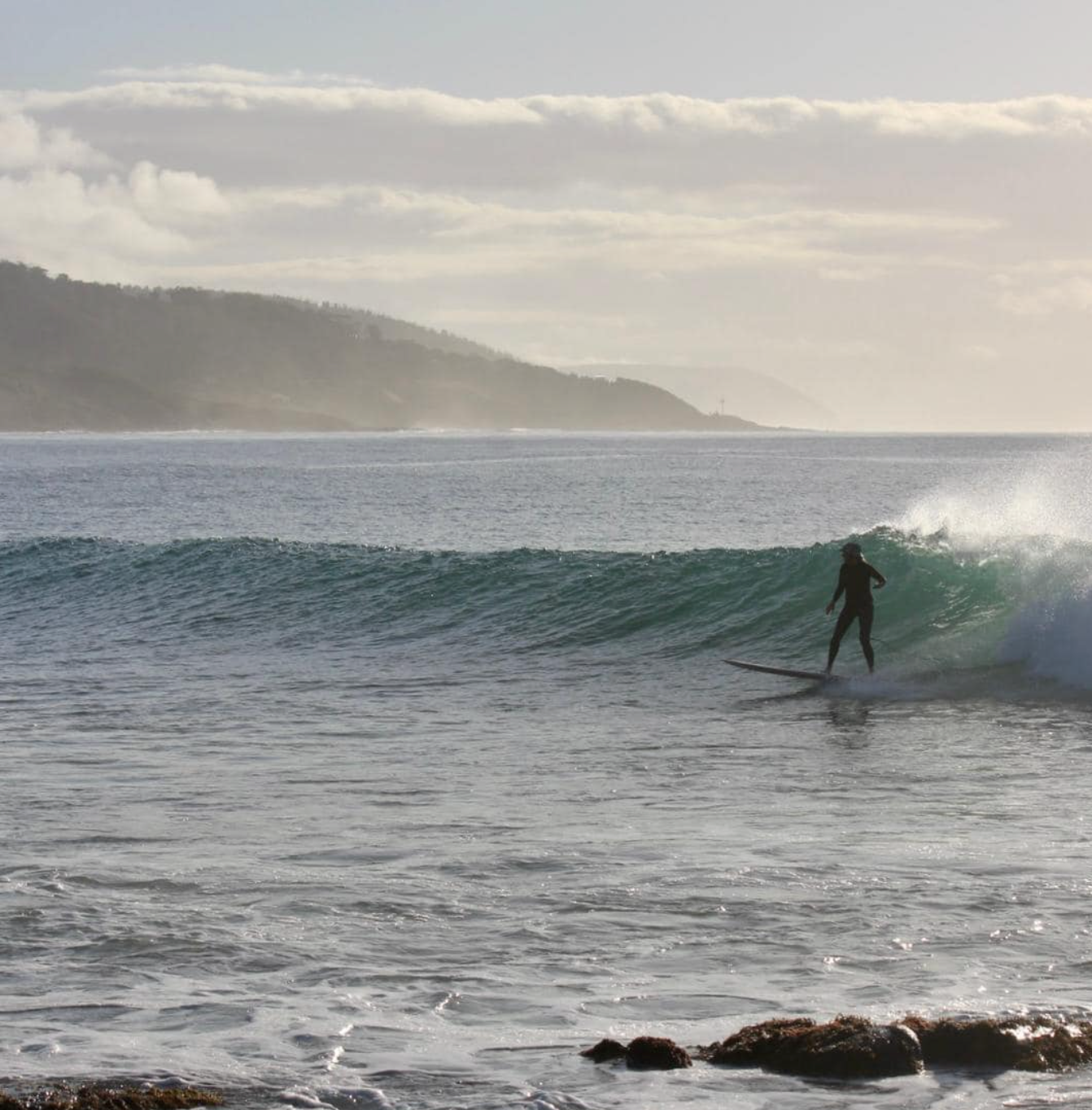
- NSW and the east coast: smaller, cleaner south swells through spring. Less size, more of those glassy, organised mornings.
- California and Hawaii: pumping. El Niño years load up the North Pacific, and this one looks no different.
If your season plans involve a trip, that's worth knowing now rather than in October.
Warmer water is moving species south

The uncomfortable part of the conversation. Warming water is pushing bull sharks further south and keeping them around longer in the season.

And Irukandji stings are now being reported as far south as Byron Bay — a species most Australians still think of as a far north Queensland problem.

That southward creep is the thread we'll keep pulling on across this series.
Why we're spending real time on the shark question
This series is going to spend real time on what's happening off Sydney's coast right now. I run the surf school at Dee Why and I was there the day Mercury Psillakis was fatally attacked, plus I've had a few closer calls of my own since.
Rather than take a side, we're sitting down with shark experts on both sides of the debate, digging into the data and into real experiences, and forming our own view as we go. We'd rather show the working than hand you a conclusion.
The hype, and the honest forecast
“It's not gonna be Godzilla himself coming out of the ground and destroying us.”
— Felix Levesque, on the media coverage
Real impacts, then — but not the apocalypse the headlines suggest.
And when I asked Felix for his honest forecast for the summer season, the answer was two words:
“Buy a longboard.”
Listen to the full episode
Forty-two minutes with Felix on the season ahead — surf, water temps, bushfire risk, and where the media has consistently got this El Niño wrong.
Listen to Episode 1 on Spotify →
Follow the Everything Ocean Podcast →
Also on Apple Podcasts. Got a guest we should be talking to? Send it through.
Catch the rest of the series under the Podcast filter in From the Lineup.
See you in the water,
Dan